A Mother’s Dream with Lowellyn Peters - Interview 4
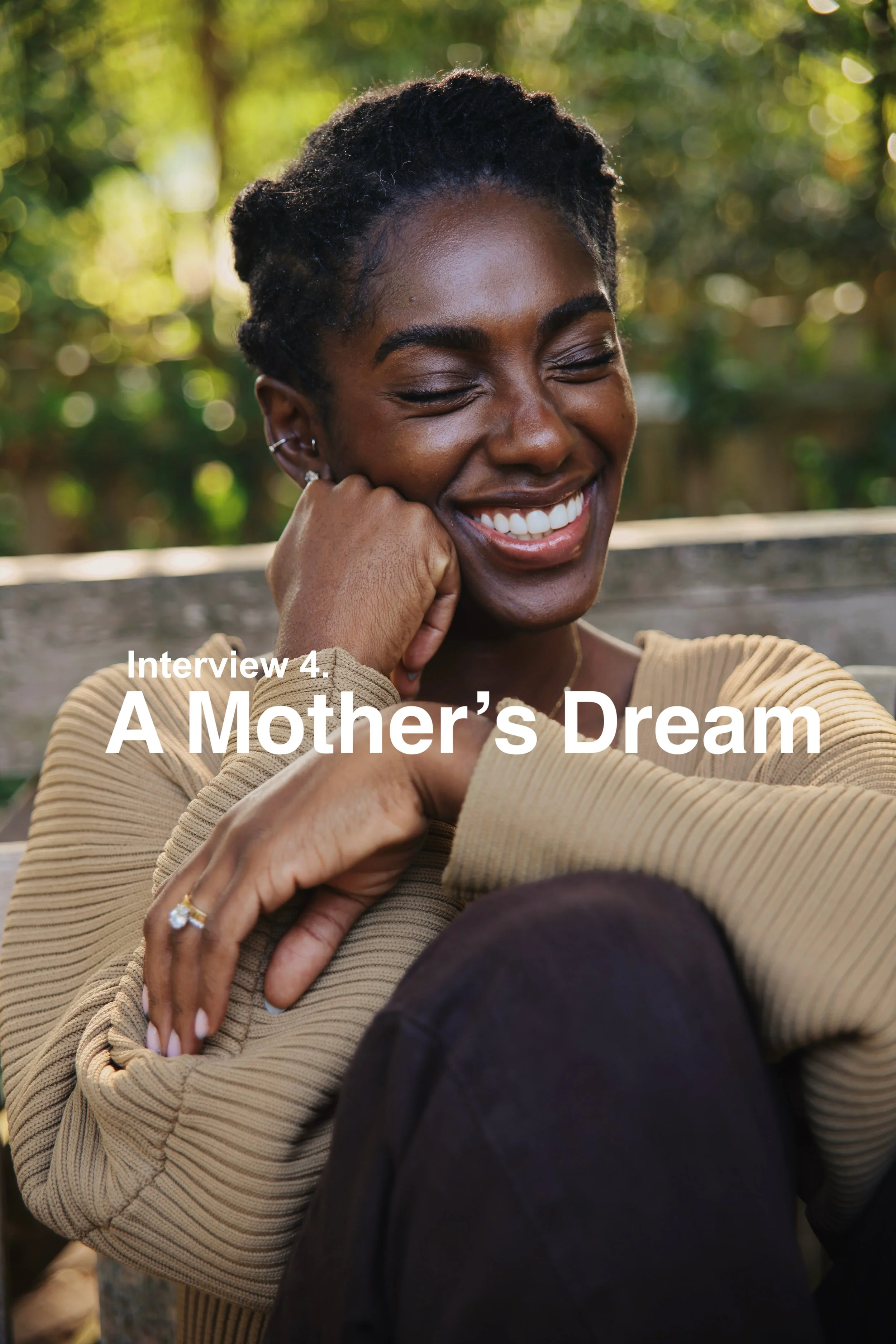
Question: I’d love to start with your journey into motherhood. You became a mother to your first daughter before meeting Isaac. What do you remember about that season of your life, and what did becoming a mum teach you about yourself?
Lowellyn: I would say that season of my life was a revelation to me. I had finished university, started working, then chose to stop working and began travelling. I felt a little bit like a nomad. I didn’t necessarily know where I was going or what my direction was.
Then I fell pregnant with Kyara, and everything changed in my mind. It became, “Okay, not only do I have to have purpose, but I don’t get to not have purpose.” That really shifted something in me.
I’ve always been very responsible, partly because I’m a firstborn. But when I became pregnant with Kyara, I remember thinking, “If I ever fell pregnant at a time when I didn’t plan for it, I would keep the baby because I need to be responsible.” I wanted to show Kyara, and any future children I might have, that I’m someone who stands by the decisions she makes, no matter how difficult or inconvenient the circumstances might be.
So, it was an interesting period of my life. It was a time when I really cemented this idea of being someone who takes responsibility and stands by her choices.
Question: And what did becoming a mum teach you about yourself?
Lowellyn: It taught me that I knew love, but I definitely discovered love in a completely new way.
There’s this unconditional kind of love that comes with motherhood. It feels like you’ve given birth to yourself, and suddenly you get to nurture and grow this little human. It’s almost like tending to a plant: you water it every day, you feed it, you care for it. They need you, and there’s this incredible sense of importance that is revealed to you.
You realise, “Okay, even if I don’t mean anything to anyone else in the world, I definitely mean something to this little human.” They don’t even understand what meaning or love is yet, but they feel that love from you. And that is indescribable. It’s very special.
I think becoming a mum made me realise how special I was through my daughter’s eyes.
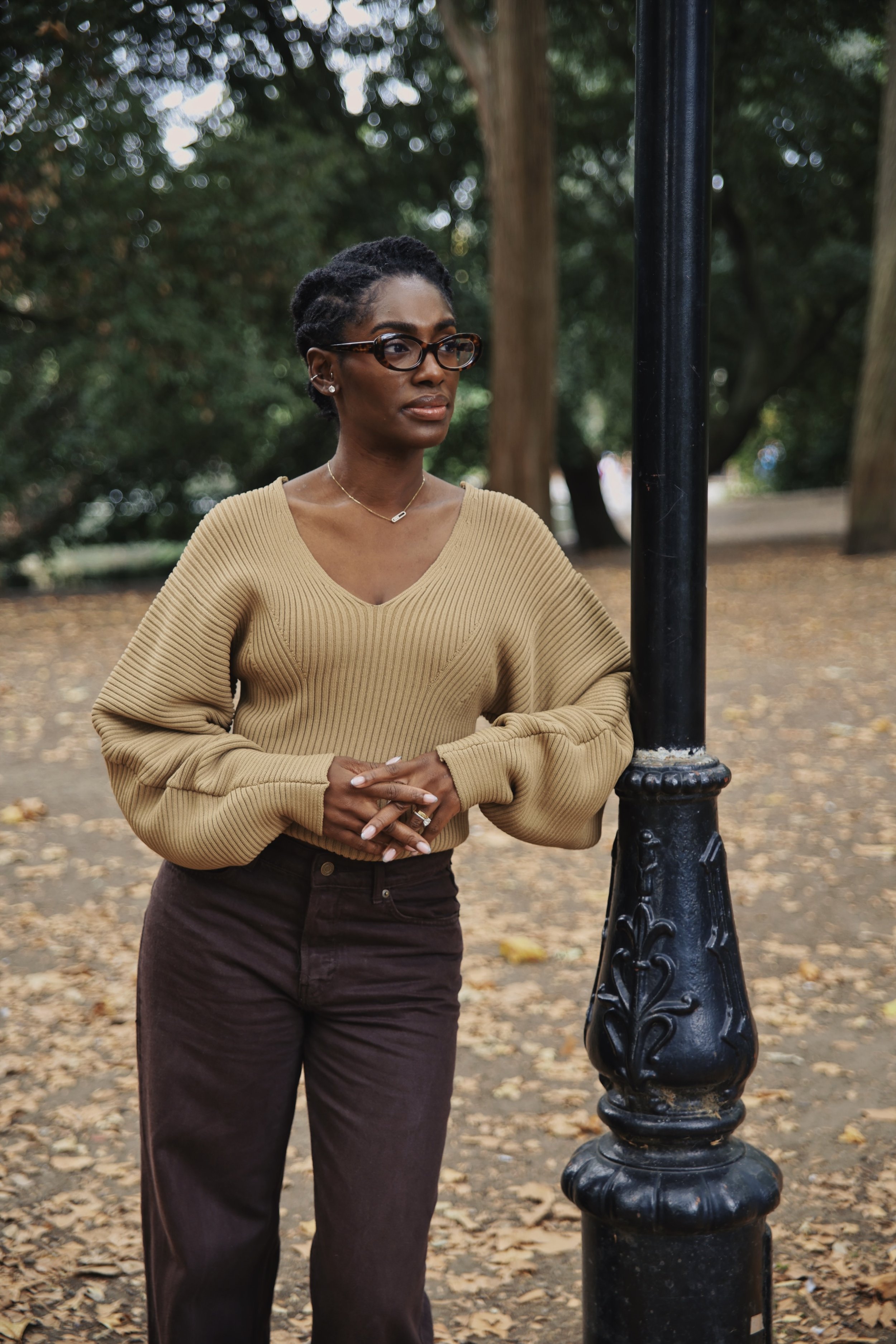
Question: You mentioned not necessarily feeling prepared at the time. What did that feeling look like for you? And how did being unprepared then compare with becoming a mother later on?
Lowellyn: I think it’s funny because, yes, you can be in a position where you’re not prepared, but being a firstborn, you’re always kept on your toes. You’re taught to get on with things, no matter how they look or how they feel. It’s like you might not feel ready, but you have to jump because nothing is waiting for you. You can’t afford not to jump, because if you don’t, how do your siblings cope? How does everything tie together?
When I was three months pregnant, I was in the Ivory Coast. At the time, I was very much thinking, “Yes, I’m going to work for the UN. I’m going to become this big person and achieve all these things.” Then I fell pregnant, and I thought, “Okay, I don’t get to allow myself to focus on that right now.”
At the time, I was still with Kyara’s dad, and things were fine, but we were doing long distance. I remember thinking, “I’m leaving the Ivory Coast. I’m going back to the land of opportunity. I’m coming back to the UK and finding a way for myself. Whether you’re with me or not, whether you help or you don’t, I need to go into this mode where I can cater to my child. It didn’t matter what anyone else did. I knew I had to be able to take care of her.
No matter what help I had around me, I felt like it didn't matter because I knew I was coming back to live at my mum’s house. My mum is an independent woman, so she was like, “Okay, I can help.” And I was like, “No. I did this. It’s my responsibility, so I will work.”
Within a week of actively looking for work, I found a job. I remember interviewing while I was pregnant. For the second interview, they asked if I could come in, and I said, “I’ve got something that’s just come up, so I’m going to do this one online.”
When I eventually went in, I would wear really, really baggy clothes to work to hide my pregnancy. After about two or three weeks, my manager at the time, JP, was incredibly supportive. I remember saying, “JP, I’ve got something to tell you.” He said, “Okay, let’s go into a room.” I told him, “I’ve just found out that I’m pregnant.” He looked at me and said, “You knew?” I said, “I did.”
And he said, “I did too, but it’s fine. It doesn’t change anything because you’re such a talent. I wouldn’t want to be without you. Whatever you need, if you need to leave early, do it. Just come back. Promise you’ll come back.” That was the first time I went on maternity leave. I think I was away for about five months, and because my mum was here helping me, I was able to go back to work.
So, it’s about knowing that you can do things for yourself, but also believing in the community that believes in you and allowing people to help. Was it hard? Yes. Did I get on with it? Yes. Did my community help me just as much as I was helping myself? Yes. That’s one thing I really want to hold on to: if you help yourself, God will help you, and He will do it through different mediums.
Question: You’ve spoken about your Ivorian heritage, and it’s such a beautiful part of your story. Are there things from your culture or your family, even the way you were raised, that you find yourself carrying into motherhood?
Lowellyn: A thousand percent. I would say Ivorians, as a whole, are very liberal. I remember when I met my husband, who is Nigerian, he said, “But people as a whole can’t just be liberal.”
And I said, “No, I promise you, about 80% of us are very open.” I don’t know if historically it has something to do with slavery or the way in which we were enslaved. I’d have to do more research into that, but there must be something there.
Ivory Coast is very mixed. I’ve married a Nigerian. My mum is actually Senegalese, although she grew up in Ivory Coast, and she married my dad, who is Ivorian. We mix a lot. Muslims marry Christians. White people marry Black people. We have a large Lebanese population, and they’re so embedded in Ivory Coast that, just from hearing them speak, you would think they were Ivorian.
So I’ve raised my children to understand the world, to always give people the benefit of the doubt and to be open-minded towards people who might not look like them or be like them.You don’t know how much you might actually have in common.
I think differences are often seen as something that isn’t conducive to a good environment, but depending on how you approach them, differences can be incredible.
Question: One thing I’ve really loved hearing through your podcast is the way Isaac speaks about growing alongside you and standing beside you through different seasons of your relationship. What has being loved and supported in that way taught you about yourself? And has it changed the way you think about the kind of relationships you want your daughters to experience one day?
Lowellyn: That’s an incredible question. I think the way Isaac has loved me has proven to me that I’m quite an impatient person. I grew up learning to do things for myself and not wait for anyone, so he has taught me a lot about patience and slowing down.
It’s like somebody saying, “I’ll love you through it. I’m here. I’m not moving. There’s no need to rush. Take your time.” He loved me through postpartum, which was probably one of the most difficult parts of loving me because it felt like me, times ten. I’m quite emotional, so I cried a lot more. I’m quite snappy, so I snapped a lot more. Everything was heightened.
But he taught me, “I understand you. I will stand through this with you.” And that’s despite him doing things wrong sometimes, or me snapping because he didn’t do something right. He would just say, “Okay, I understand. Let me pick it up again.”
So I think he’s taught me patience through the way he loves me, but also through teaching me how much I need to slow down and take my time with things.
If there’s one thing I want the girls to learn from him, it’s to be patient with themselves, to be patient with the people around them, and to always give people the benefit of the doubt.
Depending on the season someone is in, they might respond to your love in a certain way. But a season is a season. It will pass; there will be a new season, new feelings will blossom, and different things will show up.
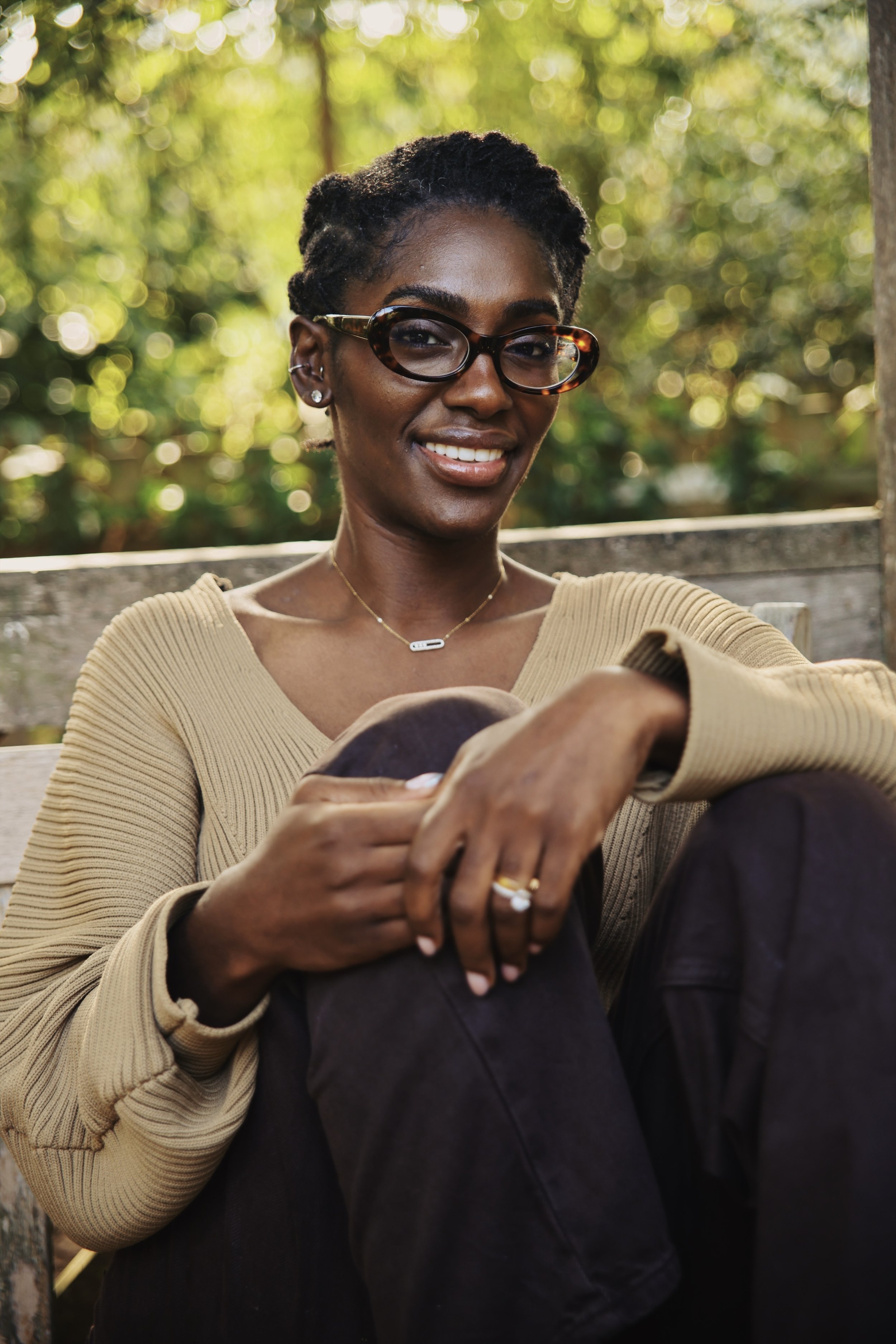
Question: When you think about the woman you were before becoming a mother, is there anything you wish you could sit down and tell her now, looking at who you’ve become, three daughters deep?
Lowellyn: I would definitely tell her, “You did the right thing. You’ve always done the right thing. And it will all be worth it.”
In the moment, it felt like I was making a lot of hasty decisions, but looking back, none of them were hasty. They all had purpose, context and background. I would tell her to follow her instincts.
You’re going to have that feeling in your stomach that says, “Ugh, I don’t feel like I should do this.” Listen to it. Or when you feel, “I really feel like I should do this,” listen to that too.
It’s incredibly telling. I think sometimes that anxiety you feel when you don’t listen to yourself might be God or the Holy Spirit telling you, “You might be going the wrong way.” It’s almost like, “I’m not going to hold your hand, but I’m giving you a sign.”
Question: Do you feel like you’ve changed as a mother with each child? And what has been your most recent lesson as a mother?
Lowellyn: I don’t think I’ve necessarily changed. I think children are born with different mothers, if that makes sense.
Depending on the context and the experience surrounding the birth of each child, you create stories that are tied to that particular child. And that influences who you show up as for them.
I still think I’m the mum to Kyara that I was when I first had her. I feel like she still sees me through that lens, and I still see myself through that lens because of what we experienced together. For example, I’m a mum who will always shower Kyara with love because, at the time, especially when things weren’t going well with her dad and me, I thought, “Yep, she needs a lot of love. It’s her and me against the world.” So even now, when we’re together, it can feel like it’s us against the world again.
With Shiloh, she came during a period when I felt more stable. I was married. I had supposedly done things the “right” way according to public standards. And because of that, I feel like she’s more independent and stands on her own two feet. It’s almost like I have an expectation that she’s good, that she’s had everything she needs, and she’s fine.
Am I a bit harsher with Shiloh? Weirdly enough, yes. Because I feel like she knows she has everything she needs, and sometimes she’s a bit spoiled in how she manifests that. It’s almost like, “Yeah, I’ve got everything.” So that makes me show up differently with her.
Then there’s Amaliah. The age gap between her and Shiloh is only 18 months, and I think I dedicate a little more time to her because I feel like she came into a family that was almost already established. Everyone had their own space, and she came in and had to get on with it. So I have moments in the kitchen where I’ll think, “Let me give you some extra kisses. Let me give you all the extra love.”
Question: When you think about raising your daughters, what are the things you hope they never have to question about themselves?
Lowellyn: Their identity. One hundred percent. That would be the first thing I’d put out there: identity.
They need to know who they are, where they come from, what they stand for and what they believe in, because I think that influences everything else. When you’re grounded in who you are, no one can come and tell you who to be. No one can easily influence you.
I want to be the kind of mum who, if my daughter picks up a cigarette, she’s doing it because she genuinely made that decision herself. I don’t want it to be because a friend did it and she felt she had to follow.
I want them to be so secure in who they are that they’re unapologetic about the choices they make for themselves. You can’t derail someone who knows themselves. I don’t necessarily mind if their choices are different from what I would have chosen. Obviously, I want them to make good choices, but if Shiloh decided, “I don’t want to work in corporate. I want to be a pianist,” I want to be able to smile and say, “Wow. I knew you’d do what you wanted to do.”
You can already see these things in children, in how they play, how they build Lego, how they interact with the world. You can sometimes see the person they’re going to become.
Question: You speak so openly about relationships, family, healing, and things you’re still figuring out. Has becoming a mother changed the conversations you feel are important to have with your own children?
Lowellyn: A lot of things can be superficial, and you might not always want to open up to the world in the way that you do with your children because you don’t owe the world anything.
But I feel like I owe my kids the world. If there’s anything I’ve learned from living and from being, it would make me incredibly happy to know that those experiences have a purpose for my children and their lives.
So the conversations I have with them, the conversations I have with Isaac, and even the conversations we have about raising them are different.
They’re really geared towards us being the best people we can be for them, but also having the patience, the bandwidth, and the space to create a safe environment where they can always express themselves. I want the conversation to always be flowing.
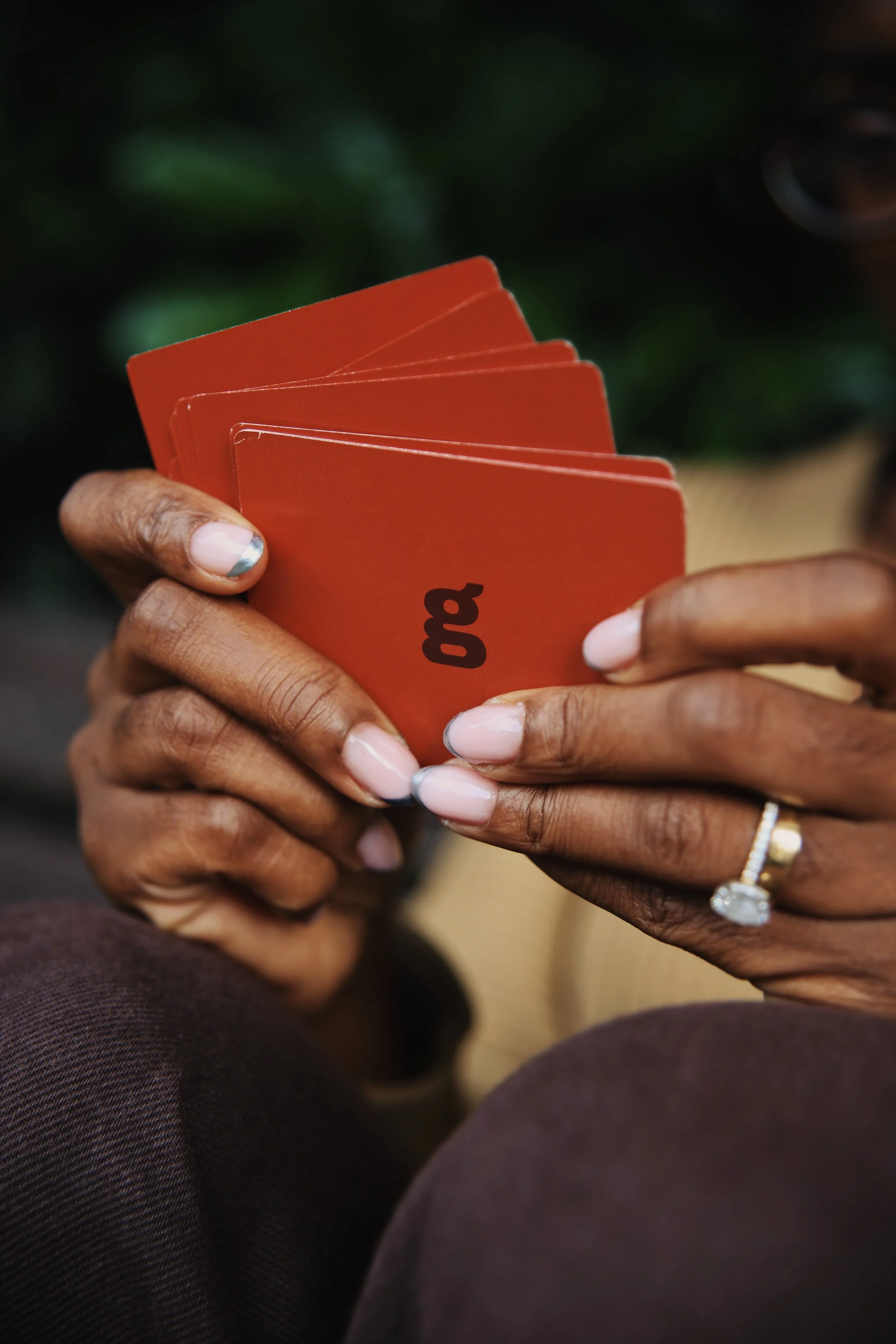
I always talk about Gist. People think “gist” is something that only happens between romantic couples, but I really bring it into family life. It has bridged the gap between my mum, my sister, and me in so many ways, and I really hope it continues to bridge the gap between my daughters and between us generationally.
Question: Has motherhood changed your understanding of your own mum? Are there things you understand differently about her now that you’re a mother yourself?
Lowellyn: One hundred percent. My mum, for instance, also lost a child like you mentioned your mum did. I had a sister. We had a two-year age gap, but we lost her when I was five, and she was three.
My mum always spoke to me about losing a child, and I understood it intellectually. I thought, “It must be really painful. I can’t imagine what it’s like.” But becoming a mum has made it incredibly vivid. It’s like I can actually picture what she must have gone through. I can place myself in that situation and imagine, “What if it were one of my children and me? How would I feel?”
And honestly, I don’t know how much I’d survive it. It’s made me see my mum as the strongest person I know, and it’s made me respect her more.
Sometimes you feel like you respect your parents because you have to. But there comes a point where you become a friend to your parent and realise you respect them because you genuinely want to.
It’s no longer an obligation. You understand their lived experience and think, “Wow. There’s a lot there. Hats off to you for what you’ve done.” So I respect my mum a lot more. And I really hope that, as my daughters grow up, they can have that same reverence for me, not because they have to, but because they want to.
I want them to be able to say, “You don’t know my mum. She’s incredible.” Not just, “I respect my mum because she’s my mum.” I want them to feel that way because, when they look at everything we’ve lived through, it makes sense to them.
Question: You’ve spoken about family dynamics and the relationship between mothers-in-law and daughters-in-law. Looking back, have those experiences shaped the way you think about marriage, family and motherhood?
Lowellyn: Let’s start with marriage. I think marriage is shaped by love, yes, but also by alignment. And alignment comes in so many forms. Do our families align? Do our values align? Do we see things in the same way? Can we even get along?
This is one of the things I mean when I talk about Ivory Coast being very liberal. There’s a lot of understanding and patience in what we accept and what we don’t. When I met Isaac, somebody else might have looked at the way he practised Christianity at the time and thought, “Absolutely not.” It was very rigid, in my opinion.
But I gave him a chance because I looked beyond that. I looked at the way he treated shopkeepers, waiters, and people generally, and I thought, “If he can be this type of person, religion aside, then this is who he is deep down.”
In terms of motherhood and marriage, it’s strange, but I understand Isaac’s mum a lot more now. I can understand why she was against us being together in the way that we got together.
I think a lot of it comes from a mother deeply loving her child and wanting to protect them in the best way she knows how. But that doesn’t necessarily mean it’s the right way, or the most conducive way, for that child to live freely and express themselves.
So I have a lot of reverence for his mum, despite what we feel she put us through at a particular point in time, because I understand a mother’s love. I understand that unconditional desire to protect and influence your child, and how that can affect the decisions you make for them.
But this is where I’ve learned a lot: you have to detach. Your child is their own person. You can love them, but sometimes you have to take a step back and recognise that if you truly love them, you need to let them be themselves.
It goes back to what I said about identity. Maybe that’s why I feel so strongly about wanting my children to have an identity.
If they get lost in the love I have for them, they might just want to please me. Then I can make them into whatever I wish them to be. But it’s not my life to live. So I have an understanding of why she did what she did, and this is why I’m so forgiving as a mother. I don’t think that if I hadn’t had children, I would ever have understood it. And I think we might have had a broken relationship.
I thank God every day for giving us experiences that allow us to understand people and really see where they’re coming from.
Question: There’s a part of one of your podcast episodes where Isaac mentions that you were referred to as “the single mum”. I imagine there were a lot of emotions and experiences wrapped up in that period of your life. What do you remember most about that season, and what did it teach you about the woman and mother you were becoming?
Lowellyn: Being referred to as, or pointed out as, “the single mum” was difficult. Factually, there’s nothing wrong with it. It’s a fact. But I feel like it can be quite degrading.
You can refer to someone as a mum. Being single doesn’t change that. It almost insinuates that being a single mum means you have one less leg to stand on, or that it completely changes the dynamic.
From a family-unit perspective, I can understand that not having the father in the picture can influence how a child functions. But I think a mum loves her child and does what’s best for her child. Whether she’s single or not, I’ve seen so many mums give everything to their children.
You don’t suddenly give 50% of yourself to your child because you’re in a relationship. You still love them completely. So I think the hurt came from people saying, “Oh, she’s a single mum,” as though it took something away from me.
It made me think, “What are you saying? Am I different in how I care for my children because I don’t have a man by my side?” That’s what was sad about it, reducing motherhood to relationship status.
But that period also taught me something important. As a woman, I never want to openly judge another woman because of what life has thrown at her. It made me realise that I want to honour people and see the best in their experiences.
And as a mother, it pushed me to work even harder towards raising my child with purpose.
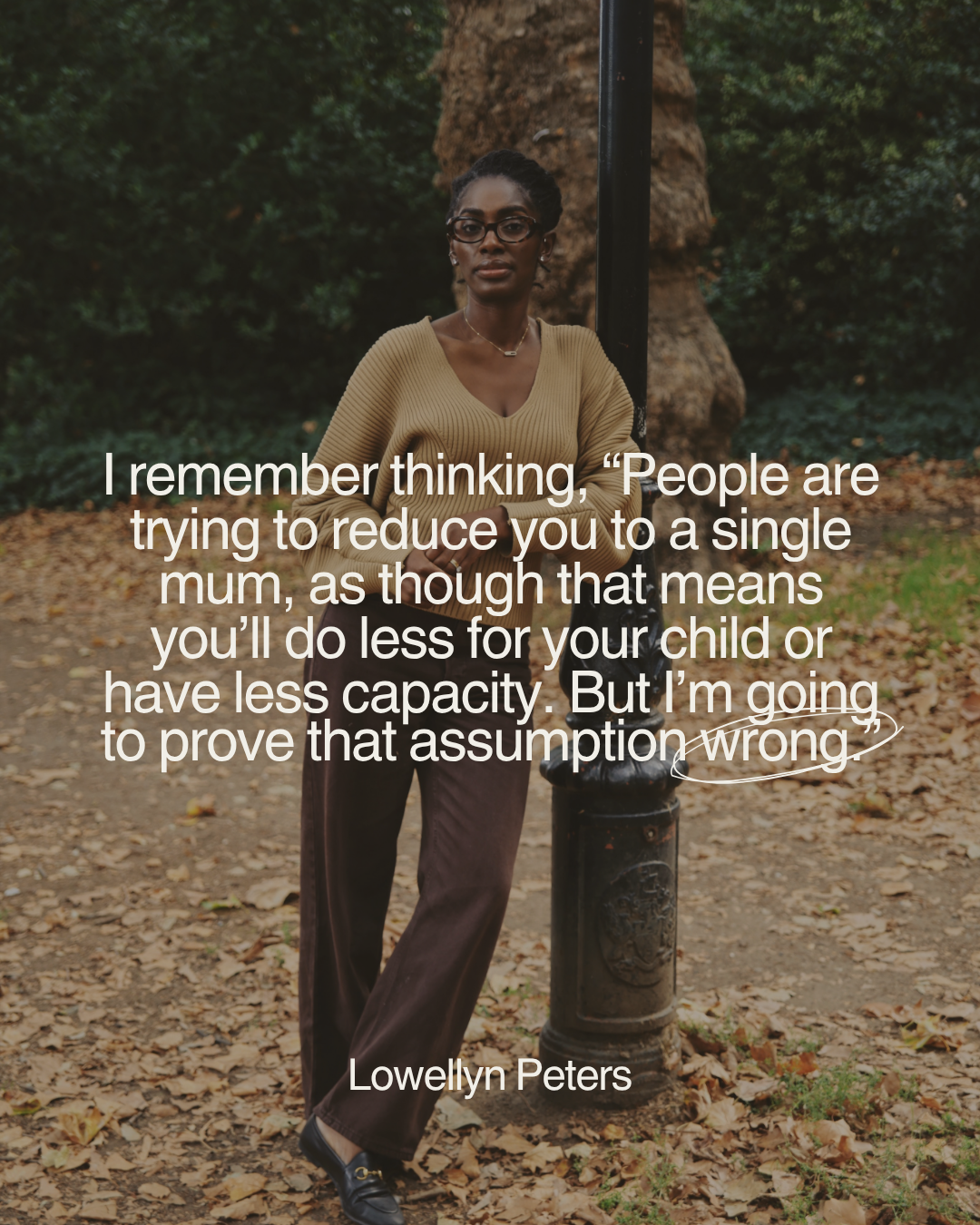
I remember thinking, “People are trying to reduce you to a single mum, as though that means you’ll do less for your child or have less capacity. But I’m going to prove that assumption wrong.” I wanted my daughter to have everything she needed and more. When parents are together, there can sometimes be a tendency to assume the other parent will pick something up. When you don’t have that choice, you have to do it yourself.
You double your effort. And I think that’s why it always makes me question the way people talk about single motherhood. So many accomplished people can look back and say, “I was raised by a single mum.” Who you are meant to become isn’t determined simply by whether you have one parent or two.
Question: To flip things, what have been some of your most joyous moments in motherhood?
Lowellyn: I think my most joyous moments have been realising who I’ve become. Just realising, “Wow, you had all that capacity. That’s incredible.”
When people say, “My mum is a superwoman,” I think you should be able to say it to yourself: “Damn, I’m a superwoman.” It’s very rewarding. You know how superheroes feel when they’ve just saved the world? They’ve gone through so much effort, but to them it’s almost like, “Great. I’ve just added and sprinkled a bit of goodness into the world.” That’s how I feel as a mum.
I’m like, “It’s all worth it.” And when I see my children smile, yes, that’s lovely, but it’s not even just the smiles because that can feel quite generic. It’s when I see my children trust me. I think, “Me? Little old me? I’m still a kid myself, but somebody trusts me with their life.”
They say, “Mummy, what should I do?”
“Mummy, what should I wear?”
“Mummy, I was so scared.”
“Mummy, can I sleep with you?”
And I’m like, “Wow. I’m a safe space.” That’s incredibly powerful. It’s very, very rewarding.
Question: The heart of this project is “A Mother’s Dream”. When you close your eyes and think of your daughters as grown women, what is the dream you have for them?
Lowellyn: I want them to live their fullest lives and be their fullest selves, no matter how they choose to express that.
That’s literally it in a sentence. However it manifests, and whatever it looks like, I want them to do it fully.
I want them to embrace the fullness of life, the fullness of themselves and how that translates into everything else they do — how they become mothers, who they meet, how they love and how they decide to simply be.
I want them to live. If my daughter says, “I don’t want to get married. I want to travel the world,” but she’s passionate, happy, and fulfilled, I will feel fulfilled too.
Of course, there might be a little part of me that thinks, “It would have been nice to have grandchildren,” because that’s something I might want for myself as a grandmother. But that’s my life. For her, I just want the best and fullest life, the most joyful one.
That would be my dream as a mother: that they fulfil their dreams in the fullest way possible.
